
UX Case Study
Identify a problem and use UX principles
to resolve it | 2022
Defining the Problem
Music Streaming services were created to resolve the issue of music piracy when they were founded in 2006. Spotify is now the most loved music streaming around the world, with the ability for free and premium experiences for their ever-increasing audience. Spotify has had a consistent growth rate, with 69 million user increase and 30 million subscription increase in recent years.
Identify the User
The focus is on the user that spends any of their free moments circulating a specific variety of social media apps newsfeeds until there is a lack of interest. The people who’s fingers swipe between apps while watching a movie and are in constant need to entertainment. I’m guessing their screen time is 6 or more hours and these hours are evenly spent scrolling feeds, down rabbit holes while simultaneously connecting with friends, icons, love interests and strangers. They are navigating their personal brand on all these platforms by using it as a tool and a distraction.
HOW MIGHT WE
Improve Spotify for users who want to connect their music-listening experiences with their audience?
Analysis
Why are people using music streaming services?
To access an unlimited amount of music without illegally downloading it.
Why do people use social media outlets?
To connect their own content based on their life with an audience who is interested.
Why can’t people connect on music streaming devices?
Music streaming services were built before social media took off.
Why would people want to connect with their music?
Because that’s what they experience in real life, and that same feeling should be able to be captured with online experiences.
Why should music and social media merge?
So music becomes a part of the continuous circulating conversation and activity online.
So people use music streaming apps the same way they scroll through social media.

User Survey
The questions will hope to capture the habits of the user to determine whether there is interest and room for more online socialisation in relation to music. The survey will hope to highlight the knowledge users have of their Instagram accounts in comparison to Spotify accounts.
The answers will reflect the respondent’s habits on their phones and if it indicates the need for connecting music to the social life of the user.
Questions Included:
Have you previously used Instagram stories/close friends to share what you have been listening to on Spotify?
How often would you share your music or podcast-related activity with an audience via private message or social media?
If you had a content feed on a music streaming service, what type of accounts would you want to follow?
How would you use a search function on a social media type feature on a music streaming app?
Do you follow podcast accounts and musicians on social media platforms?
Key Findings
Instagram is the app 95% of users choose to use if they have 30 minutes of free time, followed by Facebook 62%.
57% like to share music or podcasts via social media or privately.
Only 62% know their Spotify username.
76% already follow podcasting and musician accounts on social media platform, and like to react to posts and share them with friends.
43% would like to follow music related and 33% would like to follow on both Instagram and Spotify.


-
Meet Maya, a music lover and a self-proclaimed music sharer. She is a 25-year-old woman who is passionate about discovering new music and introducing her friends and family to artists they may have never heard before.
Maya is a social person and loves to share her passion for music with others. She enjoys creating playlists for her friends and family based on their tastes and interests, and she often recommends new artists to them.
She believes that music has the power to connect people and create a shared experience, and she loves being a part of that.
-
Meet Tyler, a 27-year-old man who is a self-proclaimed music enthusiast and Spotify user. Tyler is an outgoing and curious person who loves to know what everyone is listening to on Spotify.
Tyler is very active on social media and loves to share his own playlists with his followers. He frequently comments on his friends' posts about their favorite songs or artists and asks for recommendations.
He is always checking out the trending playlists on Spotify and loves to see what new music is popular.
PERSONA’S
Wireframing
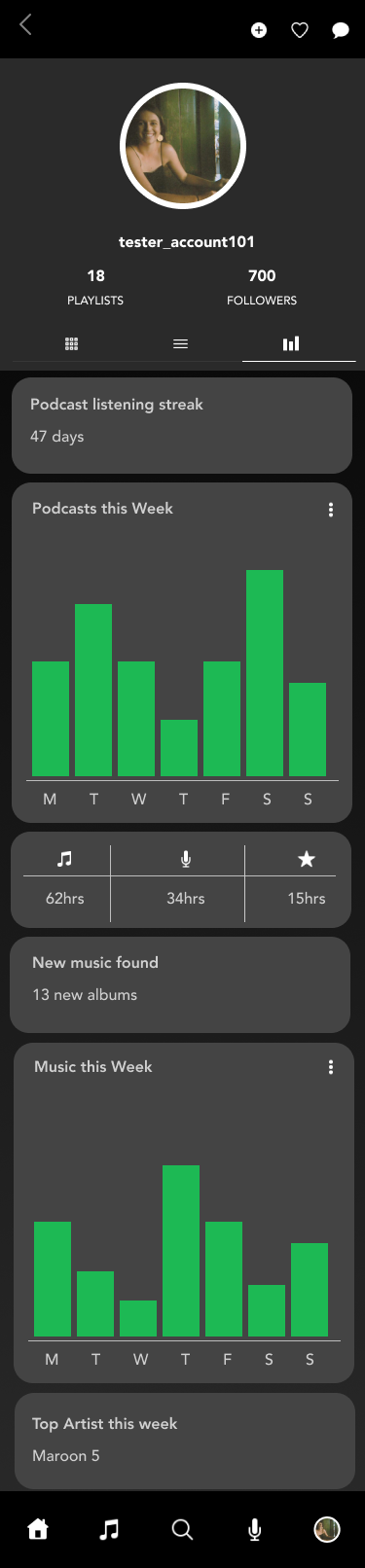
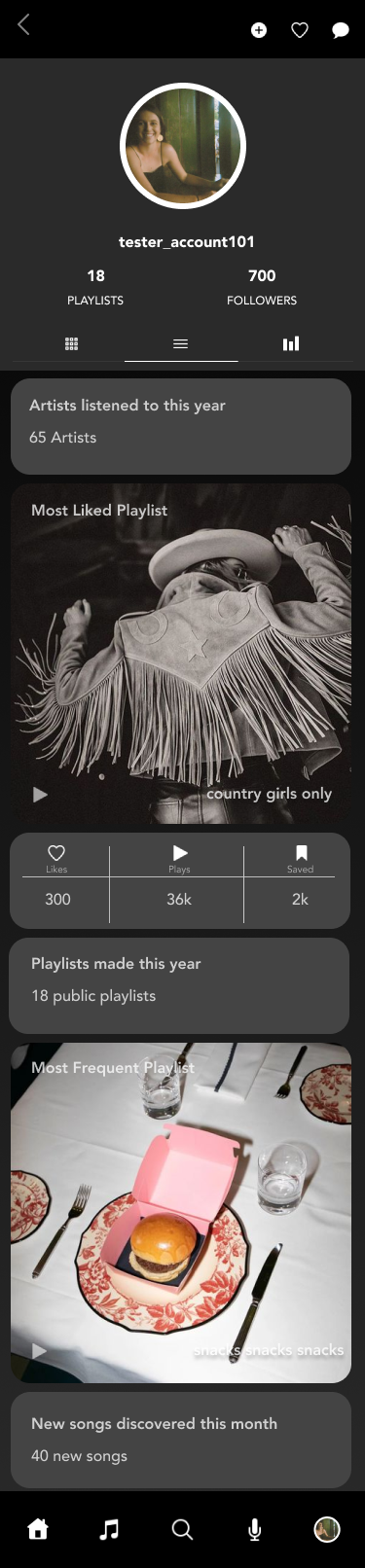
These wireframes have been inspired by Spotify and social media apps as well as the home screen on the iPhone. The familiarity of the layout will ensure that Spotify users can seamlessly navigate their way through the new Spotify feature.
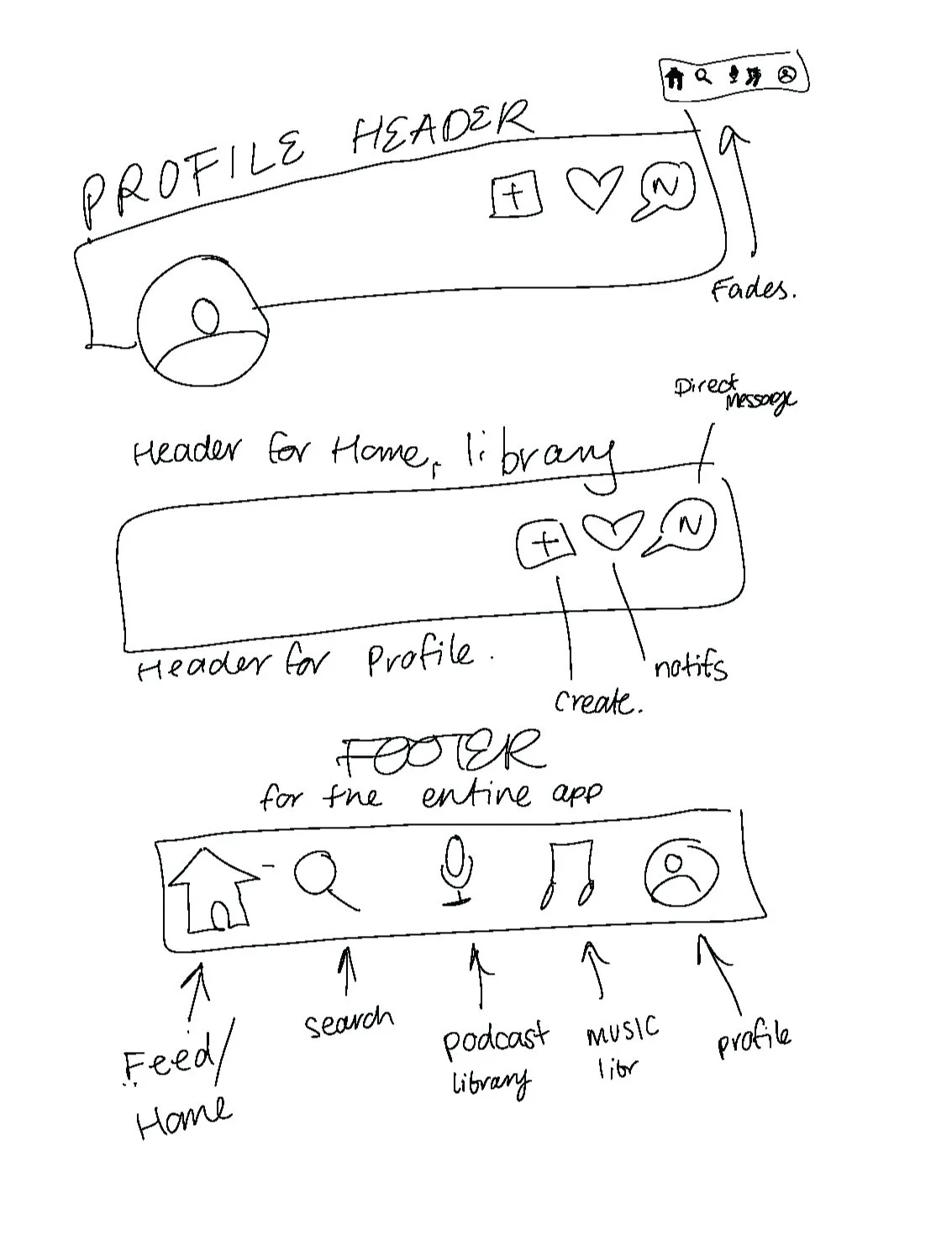
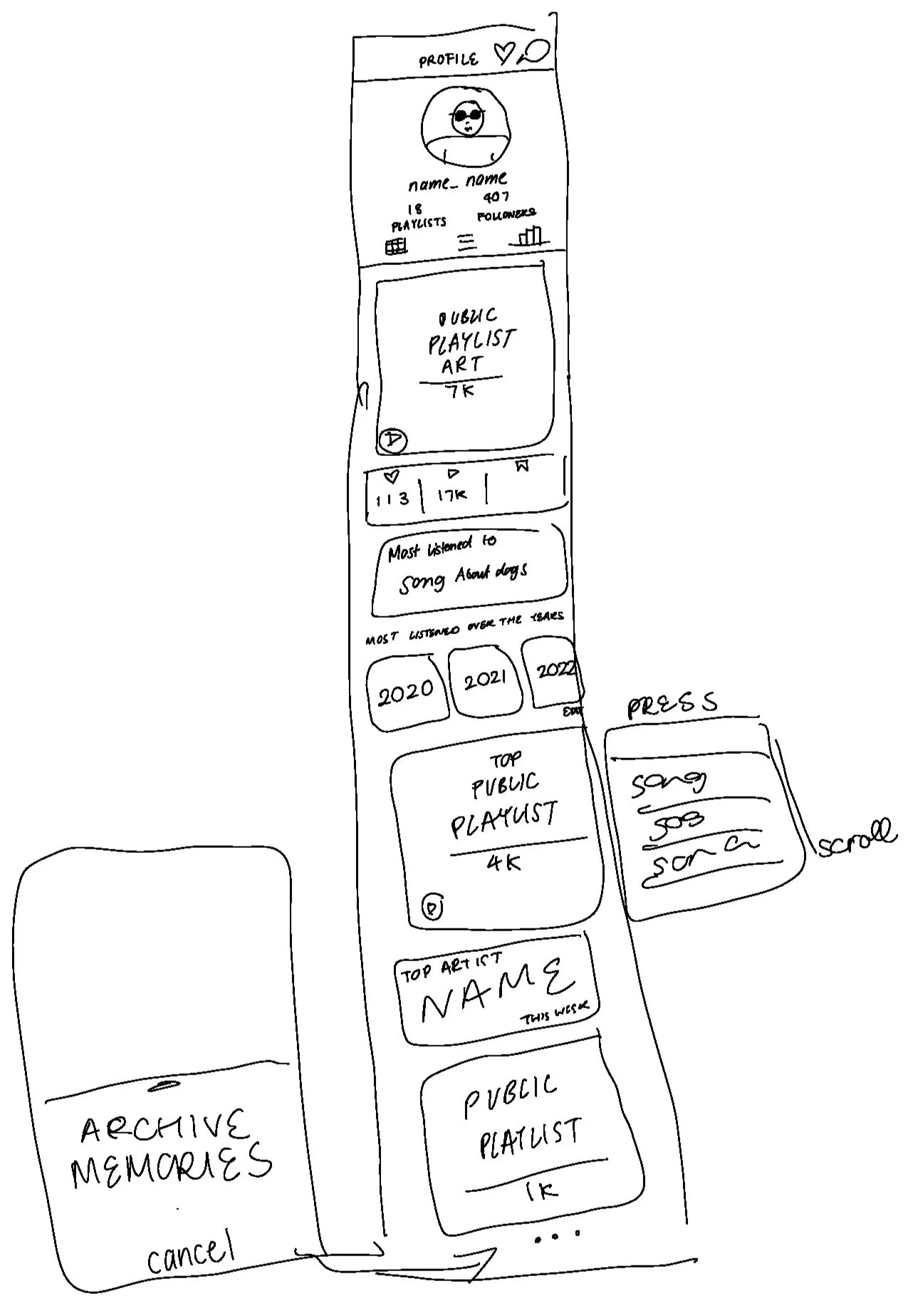
The inclusion of analytics will be very beneficial. This extends from spotify wrap up that occurs annually.
I defined the utilities necessary within the header and footer.
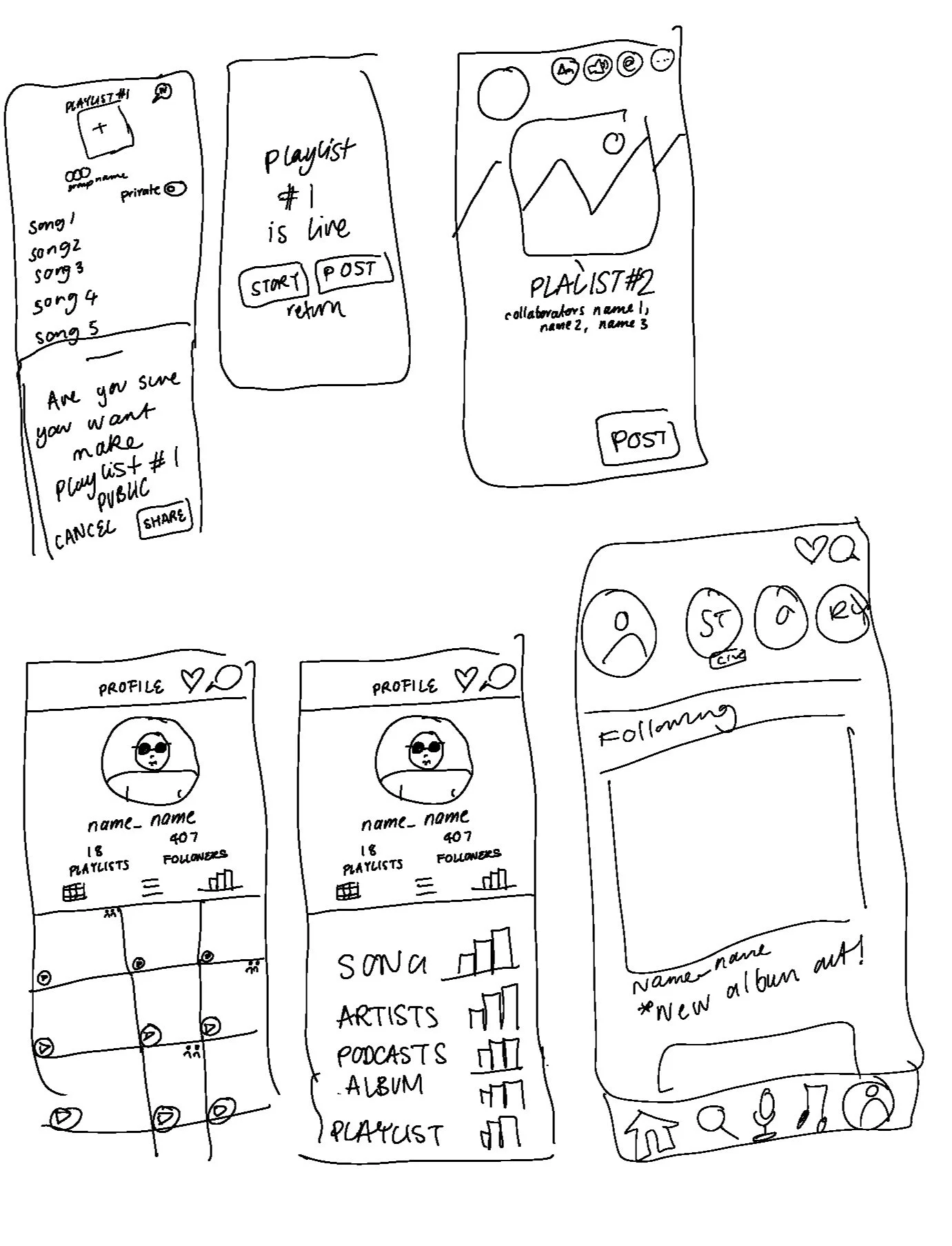
The profile includes a centred display picture, the handle name as well as how many playlists they’ve created and followers. The icons in the grid are a play icon, to sample the playlist while
still in the grid.
UI Development
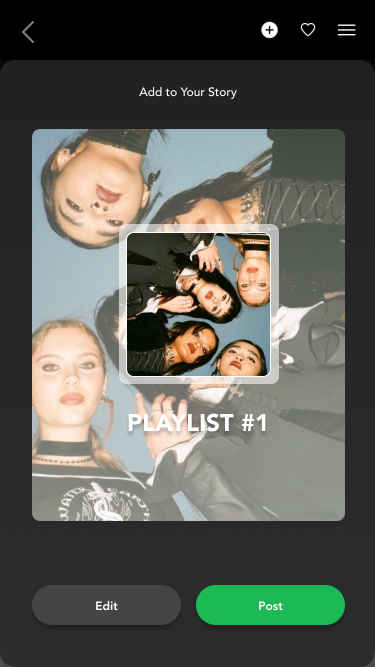
The UI prototype is a visual representation of the product's user interface, these are extended from the original sketches and will be used for usability testing to test and validate the design and functionality of the product before building the final version.

Prototype
The prototype creates a mockup experience to ensure the interactions are proficient. Developing the feature on the app will enhance the experience for the user between themselves, their music, and their followers.

Hamburger Menu
From reviewing the testing, there was a clear pattern that users go to the hamburger menu to find different options. I created a smaller overlay menu on the newsfeed page and when clicking on the icon or text it will take the user to the page directly. This will hopefully resolve the issue with the user not recognising the data icons as the menu includes the same icons with a label of personal statistics and public insights.
Confirmation
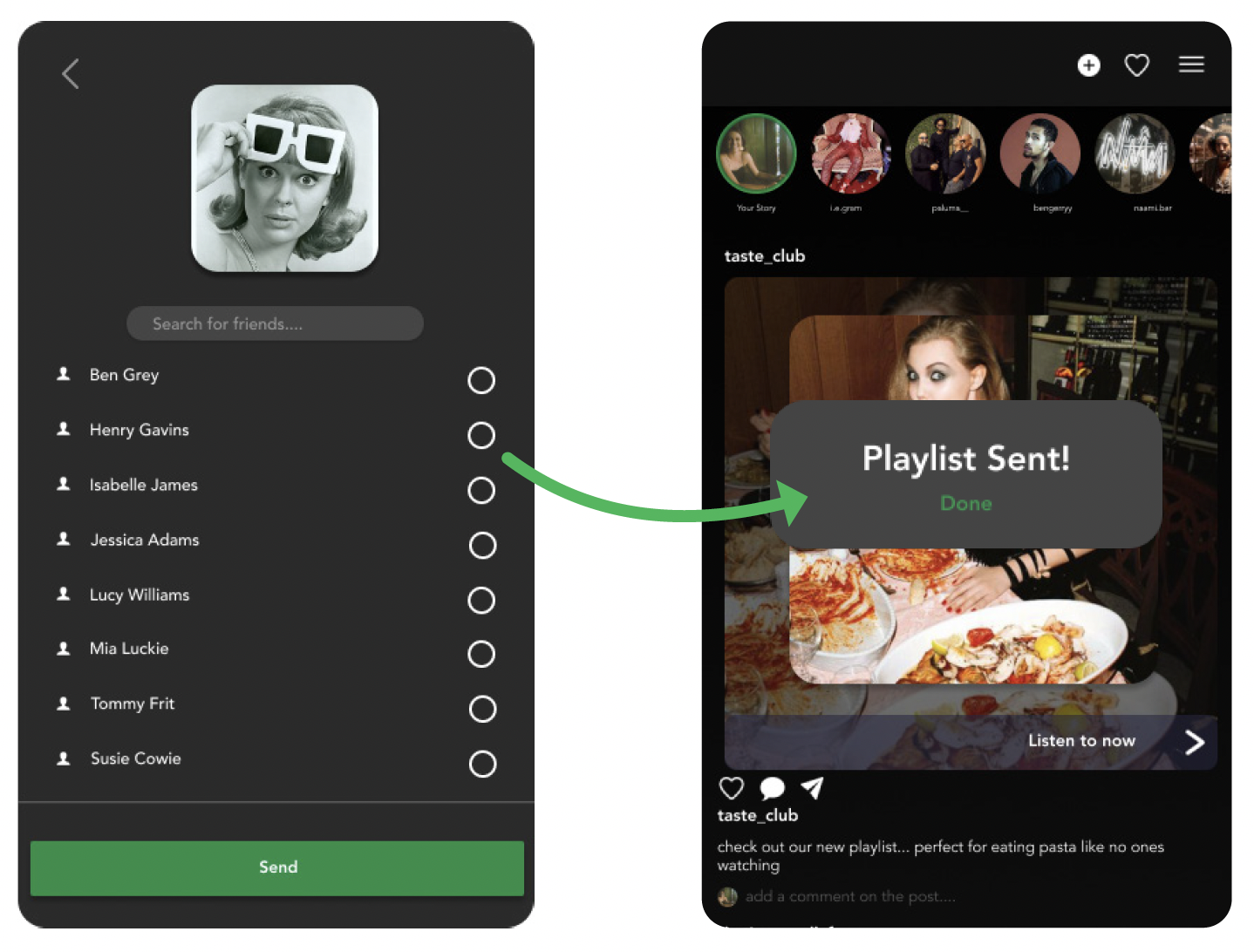
From observing the users, it was clear that they all assumed that the playlist had sent to their friends, however, I could tell the task didn’t give them a high level of satisfaction when they completed it. A simple message gives them confirmation that the task is completed. The message is short and effective, the green done button allows them to quickly exit as well and continue to their news feed.